
 Free Consultation
 Contact Us
Determining Divorce Jurisdiction in China: A Guide for Foreign Nationals
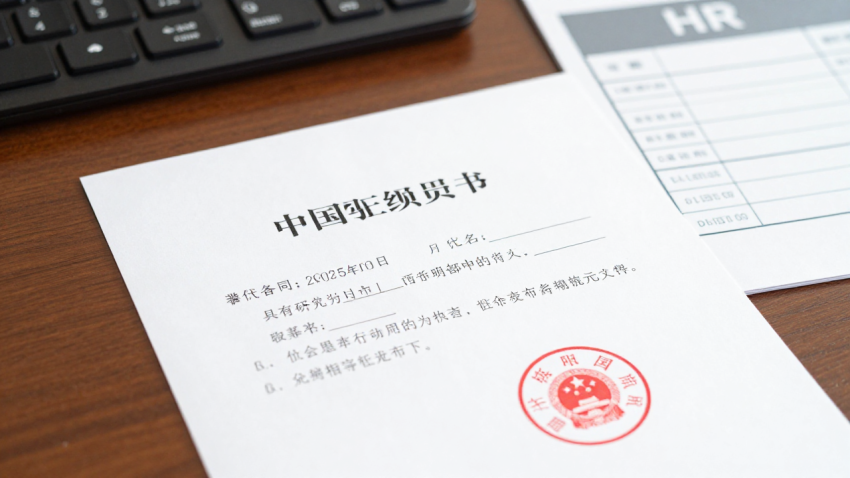
Determining Divorce Jurisdiction in China: A Guide for Foreign Nationals When a foreign national seeks a divorce in China, one of the first and most important questions is which court has jurisdiction to hear the case.
Determining Divorce Jurisdiction in China: A Guide for Foreign Nationals
When a foreign national seeks a divorce in China, one of the first and most important questions is which court has jurisdiction to hear the case. Chinese law establishes clear rules for determining the proper venue for divorce proceedings, and understanding these rules can save time, expense, and unnecessary procedural complications. This article explains how Chinese courts determine divorce jurisdiction and what foreign nationals need to know.
The Basic Rule: Defendant's Domicile
Under Chinese civil procedure law, divorce jurisdiction is primarily determined by the defendant's domicile (), which is generally the defendant's (household registration location). If the defendant's (regular residence) differs from their domicile, and the defendant has lived at that residence continuously for at least one year, the court at the defendant's regular residence has jurisdiction.
For foreign nationals living in China, their regular residence is typically determined by their residence permit registration address. A foreign national who has lived in a Chinese city for more than one year on a valid work or spousal residence permit can generally be sued for divorce in that city's court. This rule applies even if their official domicile remains in their home country.
Special Rules for International Marriages
Chinese courts apply special jurisdictional rules when one or both parties are foreign nationals. If both spouses are foreign nationals living in China, the court at the defendant's regular residence has jurisdiction. If one spouse lives abroad and the other lives in China, the Chinese spouse may file for divorce in their local Chinese court.
When both spouses live outside China but one spouse is a Chinese citizen, the Chinese citizen may file for divorce at the court of their last domicile in China before leaving the country. If both spouses are foreign nationals and neither has a regular residence in China, Chinese courts may still accept the case if the marriage was registered in China or if one spouse has established substantial connections with China.
Documents Required for Filing
Foreign nationals filing for divorce in China must submit several documents to the court: a divorce petition stating the grounds for divorce, the original marriage certificate (with official translation into Chinese if issued abroad), valid passports for both parties, residence permits if applicable, and evidence of the defendant's residence. If the marriage was registered outside China, the marriage certificate must be authenticated through Chinese consular procedures before it can be used in Chinese court proceedings.
Consent Divorce vs. Contested Divorce
Chinese law distinguishes between consent divorces () and contested divorces (). A consent divorce, where both parties agree on all terms including property division, child custody, and support, can be processed through the Civil Affairs Bureau without going to court. However, if there is any disagreement on key terms, or if one party cannot be located, the divorce must be pursued through litigation.
For foreign nationals, a consent divorce in China requires both parties to appear in person at the Civil Affairs Bureau with all required documents. If one party is outside China, a notarized power of attorney and consent statement may be accepted in some circumstances, though requirements vary by locality.
Practical Considerations for Foreign Litigants
Chinese divorce proceedings typically take three to six months from filing to judgment for an uncontested case, and six months to one year for contested cases. The court will first attempt mediation, which is a mandatory step in Chinese divorce proceedings. If mediation fails, the court proceeds to trial. Foreign litigants should ensure they have a Chinese lawyer who can navigate the procedural requirements and communicate effectively with the court.
Mr. Chaosheng Luo of Chaozhou has extensive experience handling marriage and family law matters including divorce proceedings with international elements. He advises foreign clients on jurisdictional strategy, document preparation, and representation throughout the divorce process in Chinese courts.
Foreign Marriage Certificates and Authentication
One of the most frequently encountered procedural hurdles for foreign nationals seeking divorce in China is the authentication of foreign marriage certificates. If the marriage was registered outside China, the marriage certificate must undergo a three-step authentication process before it can be accepted by Chinese courts. First, the certificate must be notarized in the country of issuance. Second, the notarized certificate must be authenticated by the Chinese consulate in that country. Finally, the authenticated certificate must be translated into Chinese by a qualified translation agency in China. This process typically takes two to four weeks and should be initiated well before filing for divorce.
Additionally, if one spouse resides outside China and cannot appear in court, Chinese law requires that party to submit a notarized power of attorney and a statement of position on the divorce, both authenticated through the same consular process. These procedural requirements cannot be waived and must be strictly followed to avoid delays or rejection of the divorce petition by the court.
Child Custody and Support in International Divorce Cases
Chinese courts decide child custody based on the best interests of the child, with particular consideration given to the child's age and current living situation. Children under two years of age are generally awarded to the mother. Children between two and eight years are evaluated based on which parent can provide a more stable living environment. Children over eight years may have their preferences considered by the court. For foreign parents, questions of relocation and international travel become critical issues in custody determinations. The court may impose restrictions on removing the child from China without the other parent's consent, and these restrictions can be enforced through exit permit controls at Chinese border checkpoints.
Key Words: Cross-border Disputes, Divorce and Family, Family Reunion

Feel free to send us an email or drop a call for free consultation.
Related Legal Topics





Other lawyers have the same expertise

Qinglei Wang is a Chinese lawyer based in Shandong with extensive experience. Call or message the attorney through...

Wenqiao Chen is a Chinese lawyer based in Shandong with extensive experience. Call or message the attorney through...

Jingfang Guo is a Chinese lawyer based in Shandong with extensive experience. Call or message the attorney through...

Yan Lu is a Chinese lawyer based in Shandong with extensive experience. Call or message the attorney through the c...

Feng Gao is a Chinese lawyer based in Shandong with extensive experience. Call or message the attorney through the...

Hanlu Yang is a Chinese lawyer based in Shandong with extensive experience. Call or message the attorney through t...
Comments