
 Free Consultation
 Contact Us
Non-Compete Agreements in China: Legal Framework and Practical Guidance
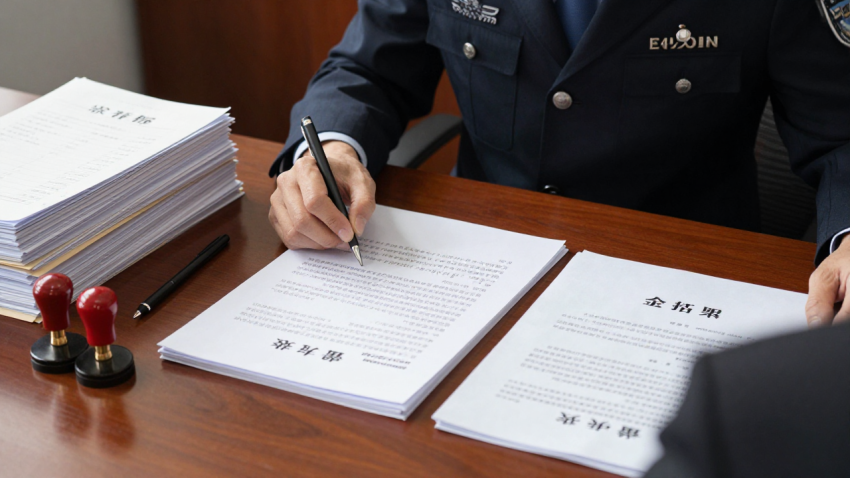
Non-Compete Agreements in China: Legal Framework and Practical Guidance Non-compete agreements () are an increasingly important tool for employers in China seeking to protect their legitimate business interests.
Non-Compete Agreements in China: Legal Framework and Practical Guidance
Non-compete agreements () are an increasingly important tool for employers in China seeking to protect their legitimate business interests. However, the legal framework governing non-compete obligations in China differs significantly from common law jurisdictions, and both employers and employees must understand their rights and obligations. This article explores the legal requirements for valid non-compete agreements and their enforcement under Chinese labor law.
The Statutory Basis
Non-compete obligations in China are governed primarily by Article 23 of the Labor Contract Law, supplemented by judicial interpretations including the Supreme People's Court's Interpretation IV on Labor Dispute Cases. Under this framework, an employer may enter into a non-compete agreement with employees who have access to trade secrets or other confidential business information, including senior managers, senior technical personnel, and other employees subject to confidentiality obligations.
The scope of employees who can be bound by non-compete obligations is limited by law to those with genuine access to confidential information. Employers cannot impose non-compete obligations on ordinary employees who do not have access to trade secrets or other protected business information.
Essential Requirements
A valid non-compete agreement under Chinese law must include several essential elements. The agreement must be in writing and signed by both parties. The restricted activities must be specifically defined, including the types of businesses or industries the employee is prohibited from joining. The geographic scope of the restriction must be reasonable and specifically described. The duration of the non-compete period must not exceed two years from the date of employment termination. The agreement must specify the amount and payment terms of monthly compensation to the employee during the non-compete period.
Compensation Requirements
Under the Supreme People's Court's Interpretation IV, if the non-compete agreement does not specify compensation, or if the employer fails to pay compensation after the employee has fulfilled the non-compete obligation, the employee may demand payment at a rate of not less than 30 percent of the employee's average monthly salary during the twelve months preceding termination. If the employer fails to pay compensation for three consecutive months, the employee may apply to terminate the non-compete obligation.
Chinese courts take the compensation requirement seriously. Employers who attempt to enforce non-compete agreements without paying the required compensation will find their agreements unenforceable. Conversely, employees who accept non-compete compensation must comply with the restriction or risk liability for breach.
Enforcement and Remedies
When an employee breaches a non-compete obligation, the employer may seek injunctive relief to prevent the employee from continuing the prohibited activity, and damages for losses caused by the breach. The burden is on the employer to prove that the employee has engaged in competitive activity and that the employer has suffered actual losses as a result.
Chinese courts may also enforce liquidated damages clauses in non-compete agreements, provided the amount is not disproportionate to the employer's actual losses. Excessively high liquidated damages may be reduced by the court under general contract law principles.
Mr. Ruian Deng of Yangjiang has extensive experience advising both employers and employees on non-compete matters. He assists companies in drafting enforceable non-compete agreements, advises employees on their rights and obligations, and represents clients in non-compete enforcement litigation. His practice also covers related trade secret protection and business competition law matters.
Relationship Between Non-Compete and Trade Secret Protection
Non-compete agreements and trade secret protection are complementary but distinct legal mechanisms under Chinese law. A non-compete agreement restricts an employee from working for a competitor for a specified period, while trade secret protection prohibits the unauthorized use or disclosure of specific confidential information regardless of where the former employee works. An employer may pursue both claims simultaneously, but the legal basis and evidentiary requirements differ. Trade secret misappropriation requires proof that specific confidential information was taken or used without authorization, while non-compete breach requires only proof that the former employee accepted employment with a competing business within the restricted scope.
Chinese courts have become increasingly sophisticated in handling trade secret cases, and the Supreme People's Court has issued detailed guidelines on evidence and proof standards. In some cases, evidence of trade secret misappropriation can be used to support a non-compete breach claim and vice versa. Employers should ensure that both their non-compete agreements and trade secret protection measures are properly documented and implemented to maximize legal protection.
International Considerations for Multinational Employers
Multinational companies operating in China face unique challenges in implementing non-compete agreements that are enforceable across multiple jurisdictions. A non-compete agreement that is valid and enforceable under Chinese law may not be recognized in other countries, and vice versa. Companies should ensure that their non-compete agreements with China-based employees are specifically drafted to comply with Chinese legal requirements, including the mandatory compensation provisions. Global non-compete templates designed for common law jurisdictions may not be enforceable in China without substantial modification. Employers should seek Chinese legal advice when drafting non-compete agreements for their China operations and ensure that compensation levels, restricted scope, and duration comply with Chinese law standards.
Key Words: Contract Drafting and Review, Employment and Labor, Wrongful Termination

Feel free to send us an email or drop a call for free consultation.
Related Legal Topics





Other lawyers have the same expertise

Qinglei Wang is a Chinese lawyer based in Shandong with extensive experience. Call or message the attorney through...

Wenqiao Chen is a Chinese lawyer based in Shandong with extensive experience. Call or message the attorney through...

Jingfang Guo is a Chinese lawyer based in Shandong with extensive experience. Call or message the attorney through...

Yan Lu is a Chinese lawyer based in Shandong with extensive experience. Call or message the attorney through the c...

Feng Gao is a Chinese lawyer based in Shandong with extensive experience. Call or message the attorney through the...

Hanlu Yang is a Chinese lawyer based in Shandong with extensive experience. Call or message the attorney through t...
Comments