
 Free Consultation
 Contact Us
Contract Law in China: Essential Knowledge for Foreign Businesses
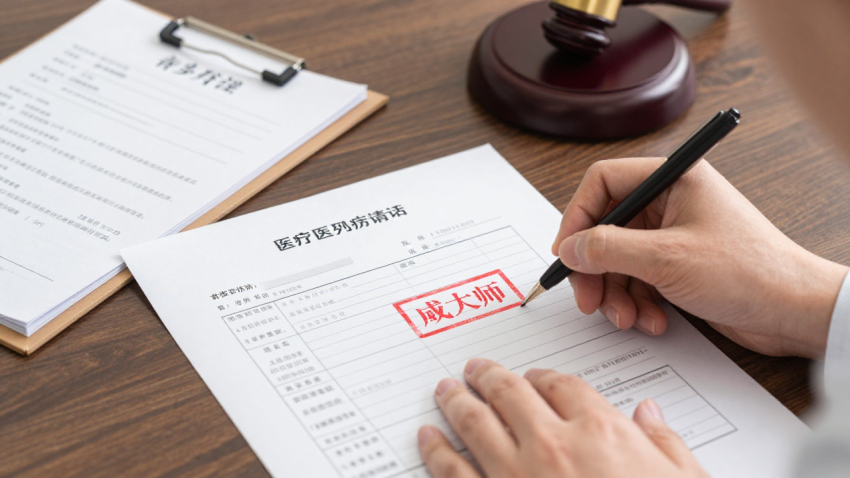
Contract Law in China: Essential Knowledge for Foreign Businesses For foreign businesses operating in China, understanding the fundamentals of Chinese contract law is essential for protecting their commercial interests and avoiding costly disputes.
Contract Law in China: Essential Knowledge for Foreign Businesses
For foreign businesses operating in China, understanding the fundamentals of Chinese contract law is essential for protecting their commercial interests and avoiding costly disputes. China's contract law framework, now codified in the Civil Code effective January 1, 2021, provides comprehensive rules governing the formation, performance, modification, and enforcement of contracts. This article covers the key principles that foreign businesses need to know when entering into contracts with Chinese counterparties.
Contract Formation Under Chinese Law
Under the Civil Code, a contract is formed when one party makes an offer and the other party accepts it. The offer must be specific in content and indicate the offeror's intent to be bound upon acceptance. An invitation to treat, such as a price list or advertisement, is not considered an offer unless it clearly indicates otherwise. Acceptance must be communicated to the offeror within the specified time period or within a reasonable time if no period is specified.
Chinese law requires contracts to be in writing for certain types of transactions, including real estate sales, guarantees, and technology transfer agreements. For other types of contracts, oral agreements may be enforceable, though written contracts are strongly recommended for evidentiary purposes. Electronic contracts, including those formed through email or digital platforms, are recognized as valid written contracts under Chinese law.
Key Contract Terms
A well-drafted Chinese contract should include several essential terms. These include the names and addresses of the parties, the subject matter of the contract including quantity and quality specifications, the price or consideration and payment terms, the time, place, and manner of performance, liability for breach of contract including liquidated damages provisions, dispute resolution clauses specifying either litigation or arbitration, and governing law provisions.
Dispute resolution clauses require particular attention. Foreign businesses should consider specifying international arbitration administered by institutions such as CIETAC or the ICC in a neutral venue. Litigation in Chinese courts is also an option, and China has established specialized international commercial courts in several cities to handle cross-border commercial disputes.
Breach of Contract Remedies
When a party breaches a contract, the non-breaching party may seek several remedies under Chinese law. Specific performance may be ordered by the court, requiring the breaching party to perform their contractual obligations as agreed. Damages may be awarded to compensate the non-breaching party for actual losses suffered as a result of the breach, including both direct losses and lost profits, but limited to losses that were foreseeable at the time of contract formation.
Liquidated damages clauses are enforceable under Chinese law, but the amount must not be disproportionately high compared to the actual loss. If the liquidated damages exceed 30 percent of the actual loss, the court may reduce the amount at the breaching party's request. Conversely, if the liquidated damages are too low to compensate the actual loss, the court may increase them.
Force Majeure and Change of Circumstances
Chinese contract law recognizes force majeure as a ground for exemption from liability for non-performance. A force majeure event must be unforeseeable, unavoidable, and insurmountable. The party claiming force majeure must promptly notify the other party and provide evidence of the event. The Civil Code also recognizes the doctrine of change of circumstances (), which allows a party to request court modification or termination of a contract if fundamental circumstances change after contract formation, making performance excessively onerous.
Mr. Duo Peng of Qingyuan has extensive experience handling contract disputes for businesses and individuals. He advises foreign clients on contract drafting, negotiation, and dispute resolution strategy, and represents clients in breach of contract litigation before Chinese courts. His practical approach to contract law helps clients avoid common pitfalls and protect their commercial interests in the Chinese market.
Statute of Limitations for Contract Claims
Foreign businesses must be aware of the statute of limitations () for contract claims under Chinese law. The general statute of limitations for civil claims is three years from the date the claimant knows or should have known that their rights have been harmed. For international sales contracts governed by the CISG, the limitation period is four years. The statute of limitations can be interrupted by the debtor's acknowledgment of the debt or by the creditor filing a lawsuit or arbitration, after which the limitation period begins anew. However, the maximum period from the date of the rights violation cannot exceed 20 years.
Chinese courts strictly apply statute of limitations rules, and claims filed after the limitation period has expired will be dismissed without examination of the merits. Foreign businesses should implement systems to track limitation periods for all contractual claims and ensure that lawsuits are filed or arbitration demands are made within the applicable period. Acknowledgment letters, partial payments, or settlement negotiations between the parties can effectively restart the clock and preserve the creditor's right to sue.
Contract Dispute Resolution Options
Foreign businesses have several options for resolving contract disputes in China. Litigation in Chinese courts is the default option when the contract does not specify an alternative method. Court proceedings are conducted in Chinese, and foreign parties must retain Chinese counsel to represent them. The court system has three levels: basic people's courts for routine cases, intermediate people's courts for significant or foreign-related cases, and higher people's courts for appeals and major cases.
Arbitration through institutions such as CIETAC is a popular alternative, particularly for international contracts. Arbitration offers neutrality, confidentiality, and the ability to select arbitrators with specific expertise. China is a signatory to the New York Convention on the Recognition and Enforcement of Foreign Arbitral Awards, making Chinese arbitral awards enforceable in over 170 countries. Mediation is also available and is actively encouraged by Chinese courts, which maintain mediation offices within courthouses. International commercial mediation is increasingly recognized as a cost-effective alternative for resolving cross-border disputes.
Key Words: Business and Contract, Contract Drafting and Review, Dispute Resolution

Feel free to send us an email or drop a call for free consultation.
Related Legal Topics





Other lawyers have the same expertise

Qinglei Wang is a Chinese lawyer based in Shandong with extensive experience. Call or message the attorney through...

Wenqiao Chen is a Chinese lawyer based in Shandong with extensive experience. Call or message the attorney through...

Jingfang Guo is a Chinese lawyer based in Shandong with extensive experience. Call or message the attorney through...

Yan Lu is a Chinese lawyer based in Shandong with extensive experience. Call or message the attorney through the c...

Feng Gao is a Chinese lawyer based in Shandong with extensive experience. Call or message the attorney through the...

Hanlu Yang is a Chinese lawyer based in Shandong with extensive experience. Call or message the attorney through t...
Comments