
 Free Consultation
 Contact Us
China Company Formation: A Complete Guide for Foreign Investors
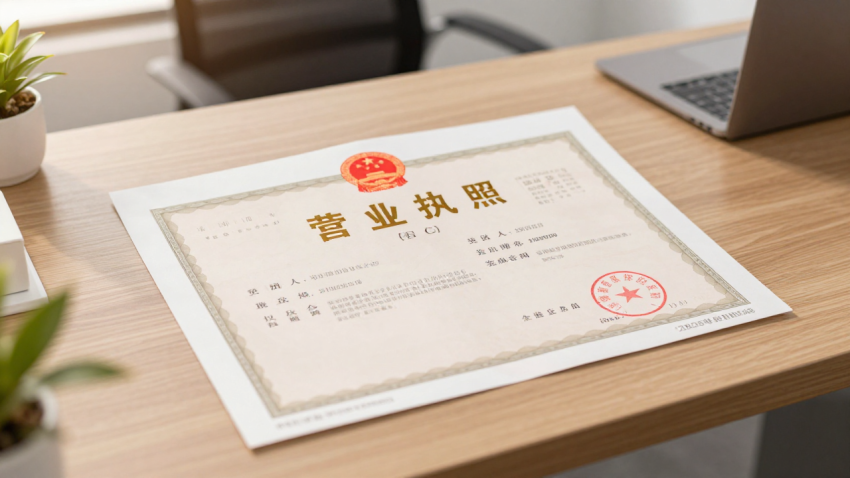
China Law Blog provides a full range of professional services for foreign investors targeting the Chinese market. Our services include offshore incorporation (Hong Kong, BVI, Seychelles, Marshall Islands and others), China company formation (WFOEs, representative offices and joint ventures), and investment consulting such as project management, due diligence, M&A, corporate restructuring, auditing and accounting.
We focus on small and medium-sized businesses, including family-owned enterprises and entrepreneurs, and provide the full range of services needed to enter and operate in China. Our multi-cultural team has years of experience in company formation, market entry advisory, tax, accounting, audits and investment project management.
Different company types are available in China. The main structures used by foreign investors are described below.
Equity Joint Venture (EJV)
Foreign investors hold at least 25% of the Chinese company. Registered share capital must cover a defined percentage of total investment. That percentage typically ranges from about 33% for investments over USD 36 million to about 70% for investments under USD 3 million.
Contractual / Cooperative Joint Venture (CJV)
A cooperative joint venture is usually set up for a specific project or partnership for a period defined in advance. Rights and obligations are driven more by contract than by equity share alone.
Wholly Foreign-Owned Enterprise (WFOE)
There are no general minimum or maximum limits on the amount of foreign investment for a WFOE, subject to industry rules and local practice. In recent years a large share of foreign investment in China has taken the WFOE form, mainly because of the absence of a Chinese joint-venture partner requirement.
Chinese Holding Company (CHC)
A Chinese holding company is intended for consolidating several investments in China under one body. Chinese law imposes credit-rating and asset thresholds on foreign investors that wish to form a CHC. Total assets and China investments must exceed the legally defined minimum.
Joint Stock Company
The minimum registered share capital is CNY 30 million. For a company listed on a stock exchange, the minimum is CNY 50 million. Foreign investors must hold at least 25% of the registered capital where foreign participation is used in this form.
Branch
At present, only foreign companies in specified sectors such as financial and certain services may set up a branch in China, subject to the restrictions in Chinese law.
Representative Office (RO)
A representative office is a low-cost form of presence. Its purpose is market presence, liaison, promotion, supervision and research. An RO may not issue invoices for sales or services to the Chinese market.
Advantages of China Company Formation
China remains a major destination for foreign direct investment in Asia and offers a large labour pool, including university graduates in major cities. A representative office can support marketing of a foreign parent company's services. Companies located in free trade zones or export processing zones may obtain tax preferences, and some provinces offer preferential corporate tax rates.
Popular locations include Beijing, Guangzhou, Shanghai and Shenzhen, with other options such as Suzhou, Qingdao, Ningbo and Dalian depending on the business case. Chinese companies can benefit from double taxation treaties with many countries, including Australia, France, Germany, India, Singapore, the UK and the US. 100% foreign ownership is permitted in a wide range of industries through a WFOE, subject to the negative list and licensing rules.
After formation, banks such as HSBC, Standard Chartered and Citibank can be used for corporate accounts where the client qualifies. Competitiveness rankings from international organisations have historically placed China among the stronger large emerging economies on economic performance and infrastructure.
Disadvantages and Practical Constraints
The standard corporate income tax rate on profits is 25%, although preferential rates or deductions may apply in defined zones or industries. Even where 100% foreign ownership is allowed, permitted activities and capital requirements vary by region and sector. Activities are limited to the approved business scope on the licence, so pre-incorporation documents must match the planned business.
Foreign-invested entities and representative offices generally need approved office premises, which can be expensive in prime cities. Formation and licensing can take several months because of multi-level filings. Annual financial statements and tax filings are required for all entities after formation.
Investors should also plan for IP enforcement, compliance culture and practical dispute resolution when choosing structure and location. Careful document preparation and realistic timelines reduce later friction with banks, tax bureaus and counterparties.
How We Support China Company Formation
- Introduction to trusted registration agents and guidance on document preparation
- Advice on city and entity choice for the planned business scope
- Support for office and operational setup where needed
- Coordination of bank account opening and post-incorporation compliance steps
- Ongoing commercial contract and dispute support after formation
Foreign investors considering a WFOE, joint venture, representative office or related market-entry structure can use the lawyer profile linked from this article to request a free consultation.
Key Words: Company Formation, Company Registration, Corporate Governance

Feel free to send us an email or drop a call for free consultation.
Related Legal Topics

Other lawyers have the same expertise

Qinglei Wang is a Chinese lawyer based in Shandong with extensive experience. Call or message the attorney through...

Wenqiao Chen is a Chinese lawyer based in Shandong with extensive experience. Call or message the attorney through...

Jingfang Guo is a Chinese lawyer based in Shandong with extensive experience. Call or message the attorney through...

Yan Lu is a Chinese lawyer based in Shandong with extensive experience. Call or message the attorney through the c...

Feng Gao is a Chinese lawyer based in Shandong with extensive experience. Call or message the attorney through the...

Hanlu Yang is a Chinese lawyer based in Shandong with extensive experience. Call or message the attorney through t...
Comments