
 Free Consultation
 Contact Us
Workplace Injury Compensation in China: A Guide for Foreign Employers
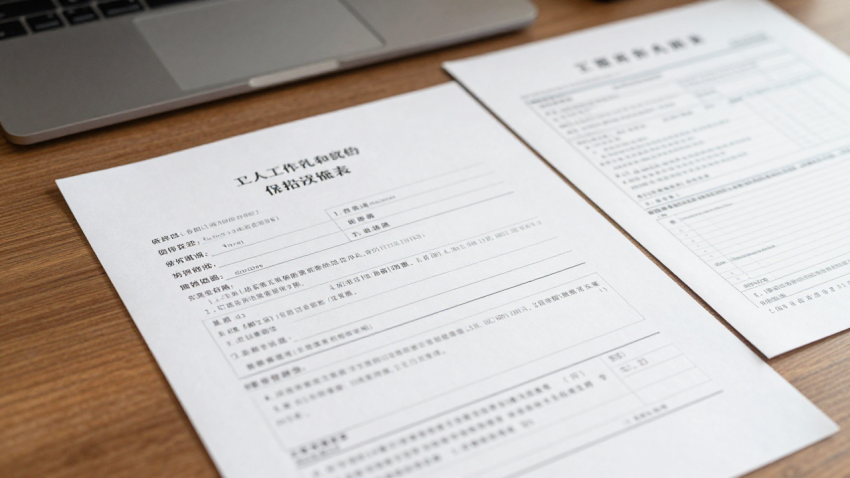
This article is adapted from the 66law.cn legal knowledge resource on workplace injury identification and workers compensation procedures in China.
Understanding Employer Liability
China’s Work Injury Insurance system requires all employers to register employees and pay insurance premiums. When a workplace injury occurs, the employer bears primary liability for medical costs, lost wages, and compensation. Foreign employers operating in China must understand their obligations under the Social Insurance Law and the Regulation on Work Injury Insurance.
- 🩺 Medical Treatment — All reasonable medical expenses covered during treatment period
- 💵 Stoppage Pay — Full wages during the medical treatment period, capped at 12 months
- 📋 Disability Assessment — Required for permanent impairment, graded from 1 (most severe) to 10 (least severe)
Injury Identification Standards
Three conditions must be met: injury occurs during work hours, at the workplace, and due to work-related causes. Extended coverage includes injuries during work-related travel, occupational diseases, and injuries during commute where the employee bears non-primary responsibility.
Compensation Structure
Compensation includes one-time disability subsidies (7-27 months of personal wages depending on disability grade), medical subsidies, and monthly disability allowances for grades 1-4. Death benefits include a lump sum of 20 times the national average annual urban disposable income.
'Employer Obligations Under Work Injury Insurance
Chinese law requires all employers to participate in the work injury insurance system. The premium rate varies by industry, typically ranging from 0.5 to 3 percent of total payroll, based on the industry\\u2019s risk classification. Rates may be adjusted based on the employer\\u2019s claims history under a experience rating system that rewards safe workplaces with lower premiums.
Foreign employers must enroll their Chinese employees and foreign employees who hold work permits in the social insurance system, including work injury insurance. Failure to register and pay contributions can result in significant penalties and personal liability for the employer if an injury occurs while insurance is not in effect.
Injury Reporting and Claim Procedures
When a workplace injury occurs, the employer must report it to the local human resources and social security bureau within 30 days. If the employer fails to file a timely report, the employee or their family members may file a claim within one year. The bureau will investigate and issue a work injury determination, which may be appealed by either party.
The work injury identification process examines whether the injury meets the statutory criteria of occurring during work hours, at the workplace, and due to work-related causes. The following documents are typically required: the employer\\u2019s injury report, the employee\\u2019s medical records and diagnosis, witness statements from colleagues, evidence of the employment relationship, and other supporting documentation.
Medical Treatment and Rehabilitation
During the medical treatment period, which is determined by the attending physician and subject to a maximum of 12 months, the employee is entitled to full wages. After the treatment period, a labor capacity assessment is conducted by a designated medical committee. The assessment determines the disability grade from 1 (most severe) to 10 (least severe).
Employees assessed as having a disability grade of 5 or 6 who cannot be placed in suitable alternative work are entitled to monthly disability subsidies paid by the employer. Grade 7 to 10 employees who can return to work are entitled to their original position and wages. If returning to work is not feasible, continued disability benefits apply.
Return-to-Work and Accommodation
Employers have a legal obligation to accommodate employees returning to work after an injury. Reasonable accommodations may include modified duties, reduced hours, workplace modifications, or reassignment to a suitable alternative position. Failure to provide reasonable accommodations may result in claims of discrimination or forced resignation.
Foreign employers should review their global workplace safety policies to ensure alignment with Chinese requirements. Implementing robust safety management systems, providing regular safety training in Chinese, maintaining accurate injury records, and establishing clear reporting procedures are essential components of compliance.
''For guidance on workplace safety compliance and injury management, consult with our employment and labor practice.
'Occupational Disease Prevention and Compensation
Occupational diseases recognized under Chinese law include pneumoconiosis, occupational chemical poisoning, occupational physical factor diseases, occupational radiation diseases, occupational infectious diseases, occupational skin diseases, occupational eye diseases, occupational ENT diseases, and occupational tumor diseases. Employers in industries with known occupational disease risks must conduct pre-employment, periodic, and exit health examinations.
When an employee is diagnosed with an occupational disease, the condition is automatically treated as a workplace injury for insurance and compensation purposes. The employer bears the cost of diagnosis and treatment, including the occupational disease diagnosis made by a designated medical institution. The employer must also report the occupational disease diagnosis to the local health administration.
Appeals Process for Injury Determinations
If either the employer or the employee disagrees with the work injury determination, an appeal may be filed with the next-level labor administrative authority within 60 days. The appeal authority will review the determination and issue a decision within 60 days. Further appeal to the people\u2019s court is available within 15 days of the reconsideration decision.
The appeals process can be time-consuming, and during this period, the employer may need to continue paying the employee\u2019s wages and medical expenses. Some employers choose to negotiate a settlement directly with the employee rather than proceeding through the full appeals process, particularly when the injury is clearly work-related and the dispute concerns only the degree of disability.
Insurance Considerations for Foreign Employers
Foreign employers should ensure that their global insurance programs extend adequate coverage to their China operations. In addition to the mandatory work injury insurance, employers may purchase supplementary commercial insurance including group personal accident insurance, medical insurance for employees not covered by social insurance, employer\u2019s liability insurance, and business interruption insurance key person insurance for critical expatriate personnel. Insurance policies issued by licensed Chinese insurers are generally recommended for local compliance, while international policies may provide supplementary coverage gaps.
Record-Keeping Requirements for Injury Cases
Employers must maintain comprehensive records of workplace injuries including the accident report, medical records and diagnosis certificates, work injury determination decision, labor capacity assessment report, insurance claim forms and payment records, return-to-work documentation, and correspondence with the employee regarding the injury and accommodation. Records should be maintained for at least ten years after the injury is resolved, as occupational disease claims may arise decades after exposure. Proper documentation protects the employer in the event of disputes and demonstrates compliance with regulatory requirements during labor inspections.
Coordination with the Social Insurance System
The work injury insurance system is integrated with China\u2019s broader social insurance framework. The same employer registration used for pension, medical, unemployment, and maternity insurance covers work injury insurance. Benefits payable under work injury insurance include medical treatment costs for work-related injuries, disability subsidies for permanent impairment, survivor benefits for fatal injuries including a lump sum payment of 20 times the national average annual disposable income, funeral subsidies, and dependent family allowances for minor children and elderly parents. The system operates on a pay-as-you-go basis with pooled funds at the municipal level. Surplus funds in the work injury insurance pool may result in premium reductions for employers with good safety records.
Industry-Specific Safety Regulations
Different industries in China are subject to specific safety regulations that supplement the general occupational safety framework. The construction industry requires safety permits and regular site inspections. The chemical industry requires compliance with the Regulation on the Safety Management of Hazardous Chemicals, including permits for production, storage, use, and transportation of hazardous substances. The mining industry requires safety licenses and technical standards for mining operations. The manufacturing sector has detailed machinery safety standards and personal protective equipment requirements. Foreign employers operating in these sectors should ensure their safety programs address the specific regulatory requirements applicable to their industry and that safety documentation is maintained in Chinese for inspection purposes.

Feel free to send us an email or drop a call for free consultation.